A few months ago I got my blood work back and my Omega-3 Index came in at 10%. That puts me in the top 5% of people globally and approaching the levels you see in traditional Inuit populations, the people who basically invented the omega-3 story in modern medicine.
I didn't get there with fish oil capsules. I got there by eating 10 ounces of wild salmon every single day.
The Inuit Story
In the 1970s, two Danish researchers named Jørn Dyerberg and Hans Bang did something unusual. They traveled to northwest Greenland to figure out why the Inuit had almost no heart disease despite eating one of the highest-fat diets on the planet. Seal blubber, whale, Arctic char, fish. Fat everywhere. By conventional wisdom of the time, they should have been dropping dead of heart attacks.
Instead, they were remarkably healthy. Dyerberg and Bang drew blood from the Inuit and compared it to samples from Danes back home. The Inuit had 7x higher EPA and 4x higher DHA in their blood. Their traditional diet delivered roughly 10.5 grams of omega-3s per day compared to 0.8 grams in a typical Western diet. Daily EPA+DHA alone was about 4–5 grams, all from whole food sources: seal, whale, and fish.
What they discovered was that EPA blocks platelet aggregation, making your blood less sticky, less prone to clotting, which is why the Inuit weren't getting heart attacks. High omega-3 intake shifts your entire body away from a pro-inflammatory, pro-clotting state. That finding launched 50+ years of omega-3 research and an entire supplement industry.
But the Inuit didn't take supplements. They ate food.
Where I Started
When I first tested my Omega-3 Index back in mid-2025, it came in at 4.9%. That's technically in the “intermediate” range but honestly it's borderline bad. Most Americans sit between 3–5%, which is the high-risk zone for cardiovascular events. Anything below 4% is considered high risk. The cardioprotective target is above 8%.
My AA/EPA ratio (arachidonic acid to EPA, a key inflammation marker) was 12.1. That's a body that's tilted hard toward inflammation. My omega-6 to omega-3 ratio was 8.1:1. Not terrible by American standards (some people are at 20:1), but nowhere near the 1–2:1 ratio that traditional populations maintained.
Given everything else going on with my health (Hashimoto's, autoimmune markers, gut dysbiosis, EBV reactivation), I needed to get my inflammation down aggressively. Omega-3s weren't optional. They were a priority.
The Experiment: 10oz of Wild Salmon, Every Day
I decided to skip the supplement route entirely and go straight to whole food. My reasoning was simple: the Inuit didn't take capsules. Their omega-3 levels came from eating actual fish and marine mammals. I figured if I could match their EPA+DHA intake through real food, I'd get the same results, or close to it.
Ten ounces of wild salmon gives you roughly 4–5 grams of EPA+DHA per day. That's almost exactly what Dyerberg and Bang estimated the traditional Inuit were consuming. It's also 2–5x what most fish oil supplements provide at standard doses.
Here's what 10oz of wild salmon delivers daily:
| Nutrient | Amount | Why it matters |
|---|---|---|
| EPA + DHA | 4–5g | Matches traditional Inuit intake |
| Protein | ~70g | Complete amino acid profile |
| Astaxanthin | 4–6mg | Antioxidant that protects the omega-3s from oxidation |
| Selenium | ~100mcg | Thyroid support, offsets mercury |
| Vitamin B12 | ~15mcg | Methylation, energy (critical with my MTHFR mutations) |
| Vitamin D | ~1,000 IU | Immune function |
This is what I mean when I talk about food over supplements. A fish oil capsule gives you omega-3s and nothing else. Salmon gives you omega-3s plus a complete protein source, a built-in antioxidant that prevents those omega-3s from oxidizing before your body can use them, selenium for my thyroid, B12 for my broken methylation pathways, and vitamin D for my immune system. It's not even close.
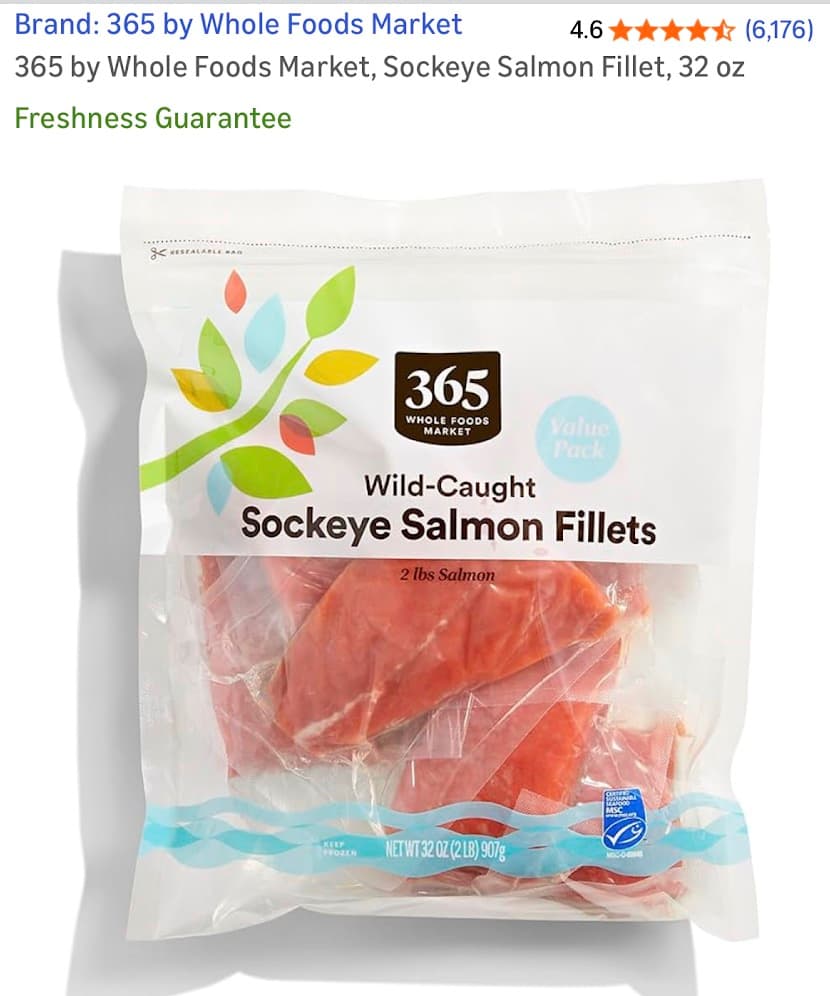
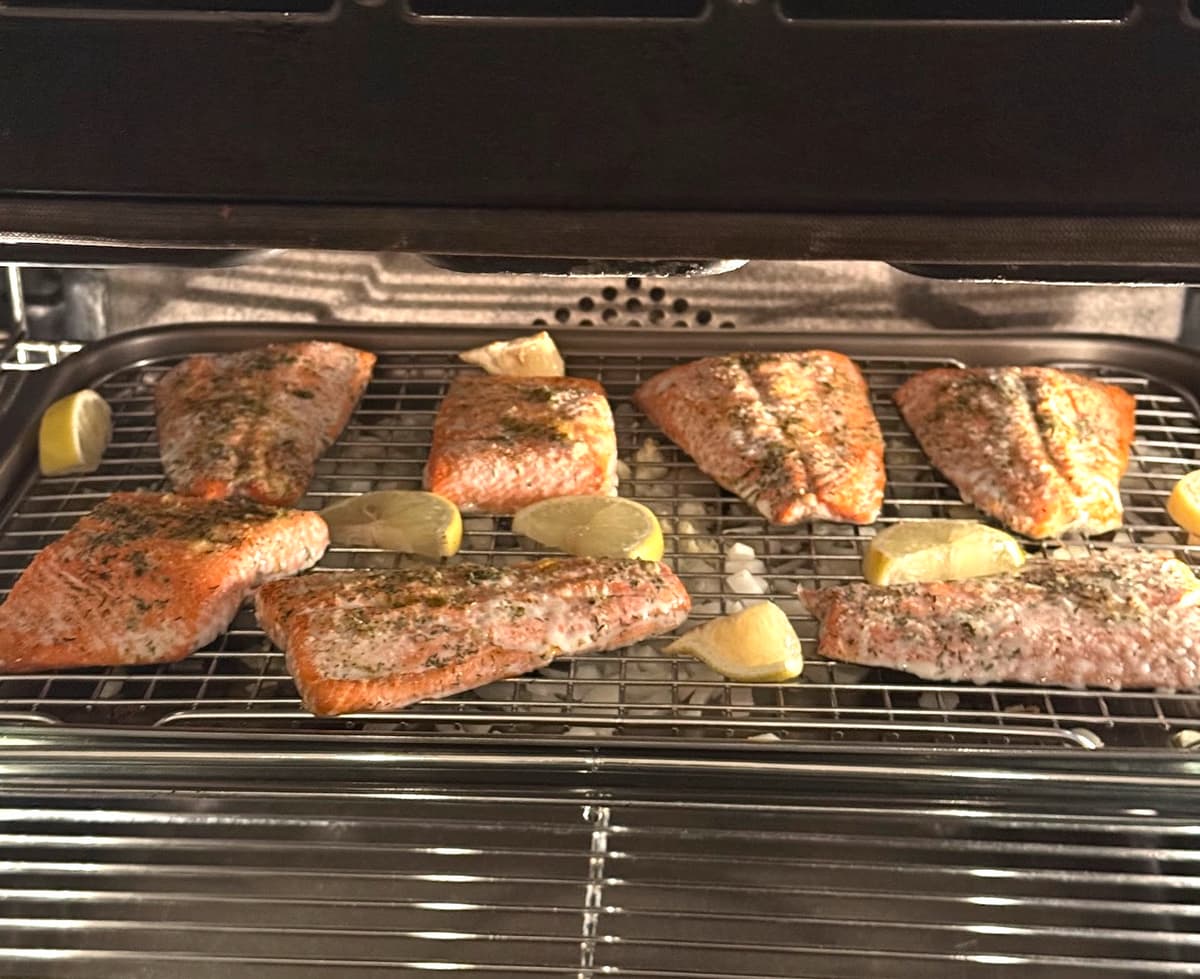
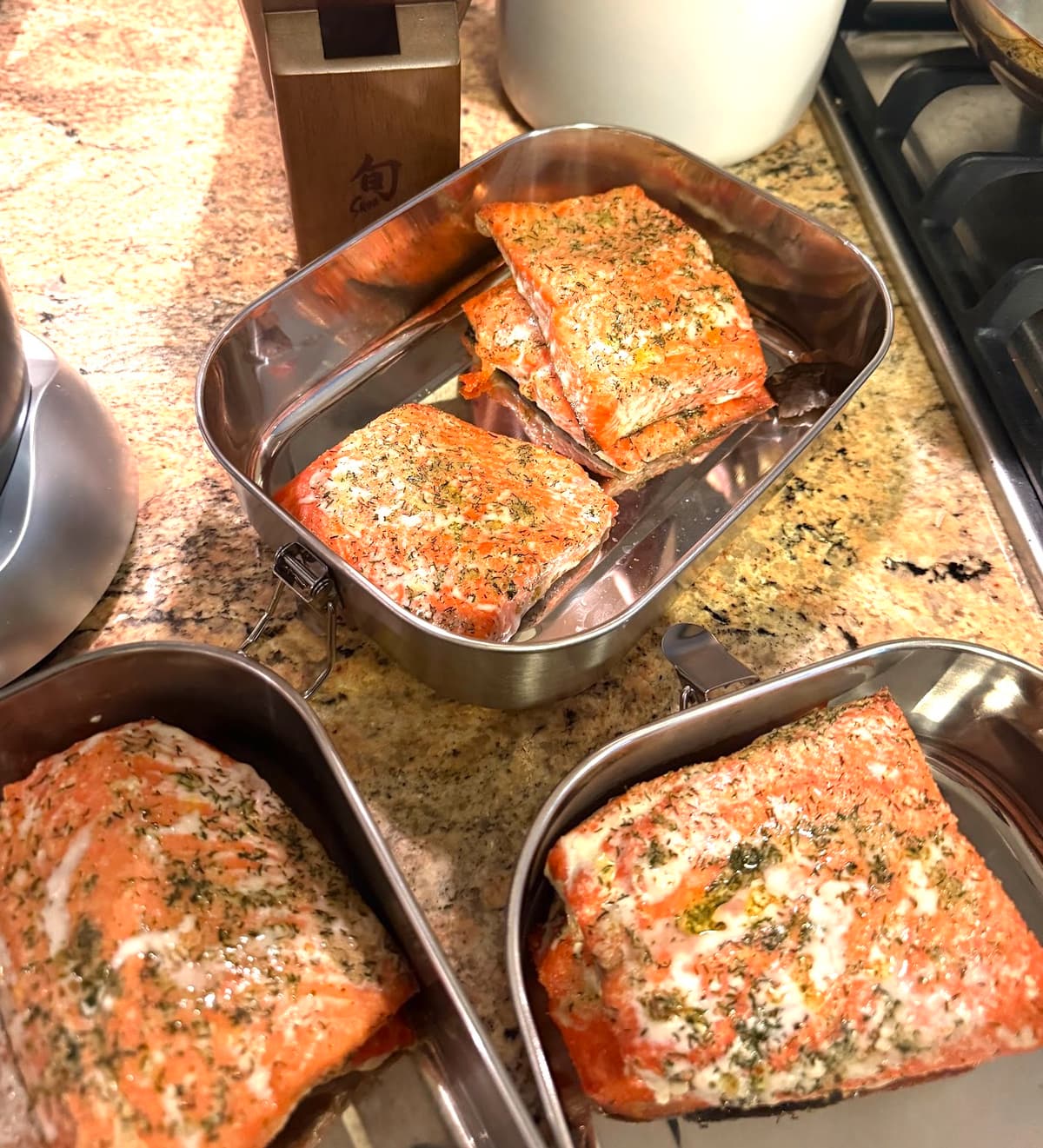
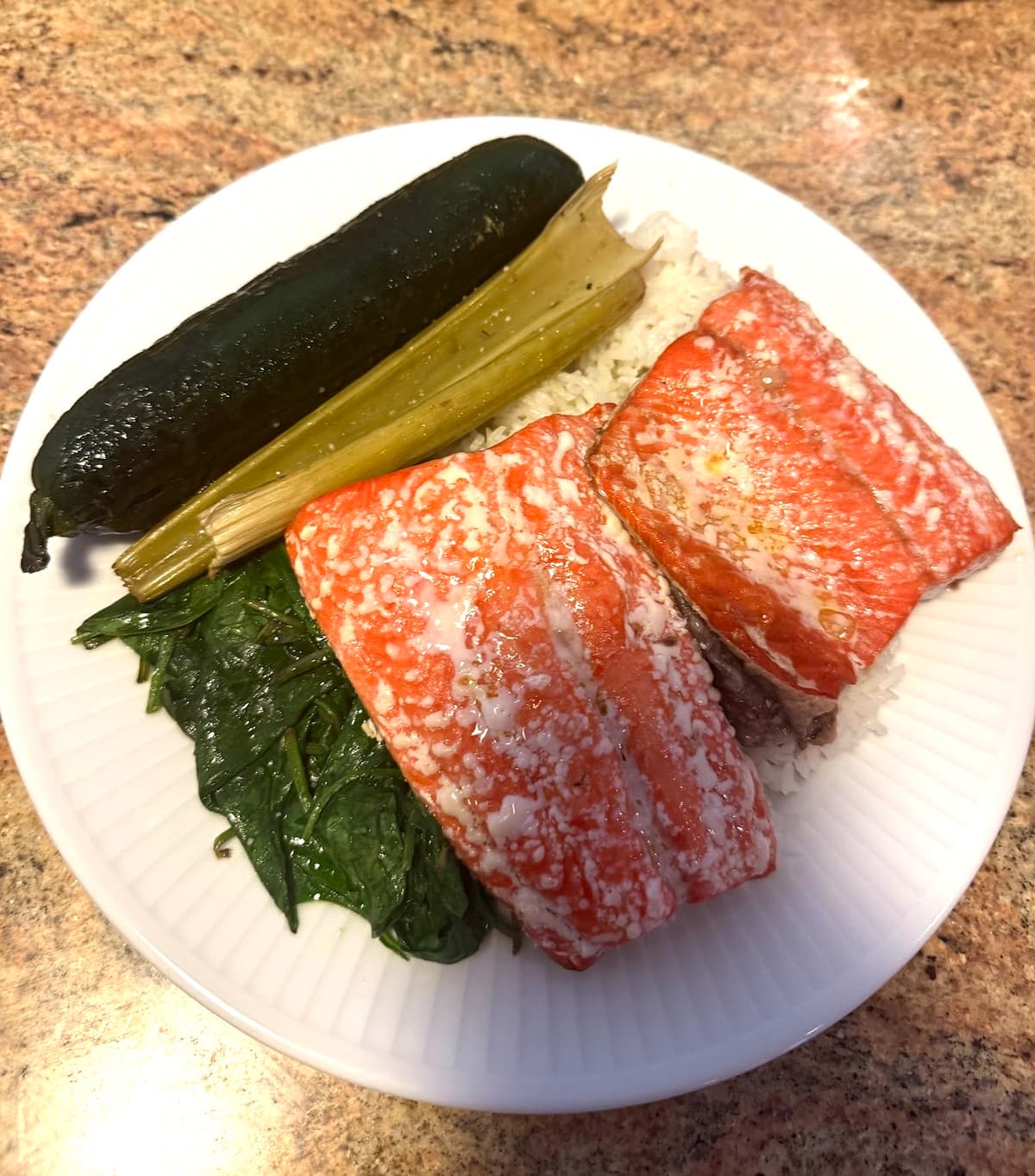
People always ask how I sustain this. The answer is bulk cooking. I buy 2 lb bags of frozen wild-caught sockeye from Whole Foods and cook an entire bag at once. Season the fillets with dill and garlic, squeeze some lemon over them, broil on a wire rack for about 15 minutes. That gives me six pieces. I portion them into stainless steel containers, two pieces per meal, and that's three days of food from one cook session. Total active time is maybe 20 minutes every three days. It's less effort than most people spend deciding what to order on DoorDash.
The Results
After about six months of daily wild salmon, here's where my numbers landed:
| Metric | Baseline | After | Change |
|---|---|---|---|
| Omega-3 Index | 4.9% | 10.0% | +104% |
| EPA | 0.9% | 4.1% | +356% |
| DHA | 2.9% | 4.4% | +52% |
| AA/EPA Ratio | 12.1 | 2.8 | -77% |
| Omega-6/3 Ratio | 8.1 | 3.7 | -54% |
A 10% Omega-3 Index puts me in the top 5% of people on the planet. My EPA at 4.1% is roughly 50–65% of what traditional Inuit had. I'm eating salmon, not seal blubber, so that tracks. My AA/EPA ratio dropped from 12.1 to 2.8, a massive anti-inflammatory shift. The traditional Inuit were around 1:1. I'm not there, but I'm in the neighborhood.
The omega-6 to omega-3 ratio going from 8.1 to 3.7 is probably the number I care about most. That ratio reflects the overall inflammatory balance in your body. Most Americans are at 15:1 or 20:1. Getting below 4:1 is where you start seeing real anti-inflammatory effects in the research.
The Guidelines Are Normie-Coded
Here's where it gets funny. My Quest Diagnostics report actually flags my omega-3 levels as above the reference range. Let that sink in. I'm at a level that the Inuit (one of the healthiest cardiovascular populations ever studied) maintained for thousands of years, and my lab report is telling me I'm too high.
This is the problem with conventional reference ranges. They're derived from the general population. The general population eats garbage and has an average Omega-3 Index of 3–5%. When your “normal range” is built on a population that's chronically deficient, anyone who actually optimizes their levels looks like an outlier. The range isn't telling you what's healthy. It's telling you what's common. Those are very different things.
The standard dietary guidelines recommend 250–500mg of EPA+DHA per day. I'm consuming 4–5 grams, roughly 10x the upper end of that recommendation. And my cardiovascular markers have never been better. My LDL particles dropped 46%. My small dense LDL dropped 55%. My HDL went up 31%. The “recommended” intake is the bare minimum to not be overtly deficient. It's not the amount that makes you thrive.
The Omega-3 Index research by William Harris is clear: 8% is the minimum cardioprotective target, and higher is better. Traditional fish-eating populations (the Inuit, the Japanese fishing villages, the Tsimane) routinely exceed 10–12%. These populations have the lowest rates of cardiovascular disease on the planet. But the standard lab report would flag them all as “above range.”
I could go higher. The Inuit averaged 12–16%+. I'm at 10%. There's room. And the research suggests no harm at those levels. The populations who live there naturally have better outcomes, not worse. So when my Quest report tells me I'm above range, I look at that flag and think: good. The range is wrong.
Why I Chose Food Over Supplements
I'm not anti-supplement. I take 27 of them daily for various reasons. But for omega-3s specifically, whole food makes more sense to me.
Bioavailability. Salmon provides omega-3s in their natural triglyceride form. Most fish oil supplements use ethyl esters, which are less absorbable. Your body has to convert them back to triglycerides before it can use them. It's an extra step that reduces how much you actually absorb.
Oxidation. This is the one people don't think about enough. Omega-3 fatty acids are extremely fragile. They oxidize easily, and oxidized omega-3s may actually be harmful. Fish oil sitting in a capsule, exposed to light and heat during shipping and storage, is a rancidity risk. ConsumerLab has found quality issues in numerous brands. Wild salmon has astaxanthin built in, a potent antioxidant that protects those omega-3s from oxidizing during digestion. It's like the fish comes with its own preservation system.
The full package. When I eat salmon I'm not just getting omega-3s. I'm getting 70 grams of protein, selenium for my Hashimoto's, B12 for my MTHFR mutations, vitamin D for my VDR mutation. The whole food matrix, protein and fat together, optimizes absorption of all of it. A capsule can't do that.
No rancidity roulette. Fresh or frozen wild salmon doesn't have rancidity concerns. You can see it. You can smell it. You know exactly what you're getting. With fish oil supplements, you're trusting the supply chain, the manufacturing process, the storage conditions, and the brand. I'd rather trust the fish.
What the Omega-3 Index Actually Measures
Quick primer for anyone unfamiliar: the Omega-3 Index is the percentage of EPA and DHA in your red blood cell membranes relative to total fatty acids. Because red blood cells live for about 120 days, this measurement reflects your long-term omega-3 status, not just what you ate last Tuesday. It's the gold standard for assessing omega-3 levels, developed by William Harris and Clemens von Schacky.
The risk categories:
- Below 4%: high cardiovascular risk
- 4–8%: intermediate risk
- Above 8%: cardioprotective target
Most Americans are in the danger zone and don't know it. Only populations eating traditional fish-heavy diets consistently break 8%. The estimated Omega-3 Index for traditional Inuit is 12–16%+. I'm at 10%. Not bad for a guy eating wild sockeye from Whole Foods.
The Honest Caveats
I want to be upfront about the tradeoffs because nobody else seems to be.
It's expensive. Ten ounces of wild salmon daily runs $15–25 per day depending on your source. That's $450–750 a month on one food item. I buy frozen wild sockeye from Whole Foods. Their 365 brand 2 lb bags of wild-caught sockeye run about $33 per bag, which works out to roughly $11 per day. Buying in bulk from Costco or directly from Alaskan suppliers can get it even lower. But this is not a cheap protocol regardless. If budget is a constraint, high-quality fish oil supplements are a legitimate alternative, but choose a brand that uses triglyceride form and tests for oxidation.
Mercury. Wild salmon is actually one of the lowest-mercury fish you can eat, much lower than tuna, swordfish, or king mackerel. And the selenium in salmon may help offset mercury exposure by binding to it. But eating any single food in this quantity every day for months, you should be thoughtful. I get my mercury tested periodically.
Sustainability. Eating this much wild-caught salmon raises legitimate sustainability questions. I try to buy Alaskan wild-caught, which is one of the better-managed fisheries. But I'm not going to pretend that high consumption has zero environmental footprint.
Genetic variation. This is an important one. In 2015, Fumagalli et al. published in Science that Greenlandic Inuit have unique genetic adaptations (specifically in the FADS gene cluster) that affect how they metabolize omega-3 and omega-6 fatty acids. They evolved to handle their extreme diet. I did not. My results may not perfectly generalize because our genetics are different. The only way to know your actual levels is to test. I use OmegaQuant, which runs the Harris Omega-3 Index assay.
Consistency matters more than intensity. The Omega-3 Index reflects a 120-day rolling average. You can't eat salmon for a week, get tested, and expect to see results. It's the daily consistency over months that builds and maintains these levels. Sporadic fish eating won't get you there.
The Bigger Picture
For me, this wasn't just about omega-3 numbers on a page. I have active autoimmune conditions. My body is in a chronic inflammatory state. My immune system is attacking my thyroid, my EBV is reactivated, my gut is dysbiotic, and my genetics make detoxification harder than it should be. Every point I can shift my inflammatory balance matters.
Dropping my AA/EPA ratio from 12.1 to 2.8 means my body is producing significantly more anti-inflammatory eicosanoids and fewer pro-inflammatory ones. That's not a supplement label claim. That's measurable biochemistry. It shows up in my blood work.
The Inuit figured this out thousands of years ago without any understanding of the underlying science. They just ate what was available (seal, whale, fish) and their bodies responded. Dyerberg and Bang came along in the 1970s and explained why. Now we have the tools to measure it precisely in our own blood.
I'm not eating seal blubber in Greenland. I'm eating salmon in San Francisco. But the principle is the same: eat the food, get the nutrients, measure the results. No capsules required.
Why Not Sardines?
This is the most common question I get. Sardines are cheap, low mercury, high in omega-3s. Why not just eat sardines instead of spending $11 a day on salmon?
I ran the numbers. To match the 4–5 grams of EPA+DHA I get from 10 ounces of salmon, you'd need about 4 cans of sardines per day. Here's what that looks like:
| Nutrient | 4 cans sardines | 10oz salmon | Problem? |
|---|---|---|---|
| EPA + DHA | ~4.8g | ~4.5g | Equivalent |
| Sodium | 1,400–2,000mg | ~170mg | ~10x more |
| Selenium | ~200mcg | ~100mcg | Nearing upper limit |
| Iron | ~10mg | ~2mg | Full male RDA |
| Calcium | ~1,400mg | ~50mg | Over full RDA |
| Astaxanthin | 0mg | 4–6mg | No oxidation protection |
| Vitamin D | ~700 IU | ~1,000 IU | Salmon wins |
Sodium is the killer. Four cans of sardines deliver 1,400–2,000mg of sodium before you eat anything else. The AHA ceiling is 2,300mg per day. My salmon contributes about 170mg, leaving room for the rest of my diet. With sardines, you've basically spent your entire sodium budget on one food.
Selenium stacking. Sardines at this volume put you at ~200mcg of selenium per day from one food source. The tolerable upper limit is 400mcg. If you're taking supplements that contain selenium (I am), eating other selenium-rich foods, or eating brazil nuts, you're getting uncomfortably close. Salmon at ~100mcg leaves much more headroom.
Then there's the practical problem: you can't get fresh sardines in the US. The Pacific sardine fishery has been largely closed since 2015 due to population collapse. Fresh imported sardines show up occasionally at coastal fish markets, but they're seasonal, inconsistent, and sardines spoil faster than almost any fish. So you're locked into canned. And eating 4 cans a day, every day, for months introduces its own issues.
Can linings. Every can has an interior coating, either BPA or a BPA substitute. At 4 cans per day, that's meaningful chronic exposure to endocrine-disrupting compounds. Not the kind of thing I want to layer on top of existing autoimmune issues.
Histamine. Sardines are one of the highest-histamine fish, and the canning process increases histamine further. If you have any mast cell issues, gut permeability, or autoimmune conditions (I have all three), high-histamine foods at this volume can make things worse.
Packing oil. Many brands pack sardines in soybean oil, which is high in omega-6. That partially counteracts the omega-3 benefit, which defeats the whole point. You have to specifically seek out sardines in olive oil or water, and even then the olive oil ones tend to run higher in sodium.
I made the oxidation argument against fish oil capsules earlier in this post. Canned sardines sitting on a shelf for months have similar concerns, and unlike salmon, they have zero astaxanthin to protect those fragile omega-3 fats from oxidizing.
Sardines are a great food. I eat them occasionally. But as a full replacement for the salmon protocol at the volumes needed to match Inuit-level omega-3 intake, the math doesn't work without creating new problems. You save $5–7 a day and pick up a sodium overload, selenium stacking risk, daily BPA exposure, high histamine load, and no oxidation protection. That's not a trade I want to make.
References
- Dyerberg, J. & Bang, H.O. “Fatty acid composition of the plasma lipids in Greenland Eskimos.” American Journal of Clinical Nutrition (1975).
- Bang, H.O. & Dyerberg, J. “Plasma lipids and lipoproteins in Greenlandic west coast Eskimos.” Acta Medica Scandinavica (1972).
- Harris, W.S. et al. “The Omega-3 Index: A new risk factor for death from coronary heart disease.” Preventive Medicine (2004).
- Fumagalli, M. et al. “Greenlandic Inuit show genetic signatures of diet and climate adaptation.” Science (2015).
- OmegaQuant global Omega-3 Index population data.